
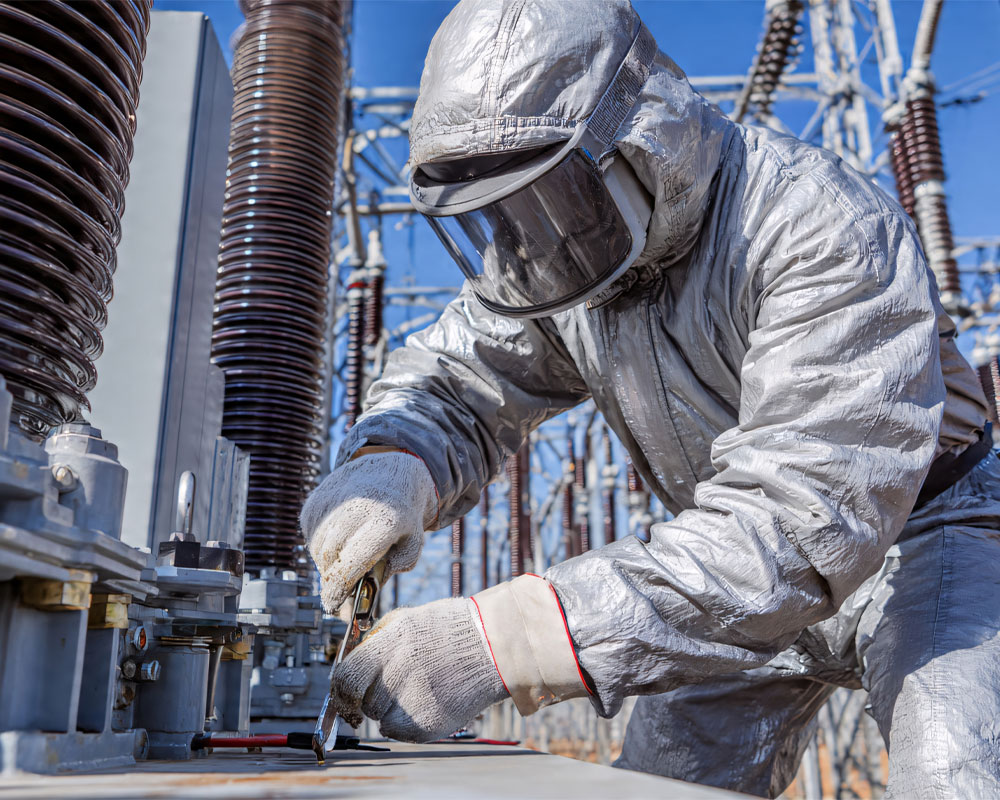
Electrical Safety, Arc Flash & NFPA 70E Services
Electrical hazards are one of the leading causes of serious workplace injuries, including arc flash burns, electrocution, shock incidents, equipment destruction, and OSHA citations. Employers with energized equipment, maintenance operations, live troubleshooting tasks, or industrial electrical systems must proactively manage these risks in compliance with OSHA regulations and NFPA 70E standards. At Weinstein Safety Consulting, LLC, we provide practical electrical safety consulting, arc flash hazard assessments, NFPA 70E program development, and instructor-led electrical safety training designed to reduce injury risk while keeping operations productive. Our approach emphasizes real-world application — not just paperwork — so your electrical safety program is usable, defensible, and effective.
Arc Flash & Electrical Hazard Assessments
Arc flash and electrical shock hazards must be identified and evaluated before effective controls can be implemented. We conduct structured electrical hazard assessments that review equipment, job tasks, maintenance procedures, and employee exposure risks to determine where improvements are necessary. These assessments help employers understand arc flash boundaries, shock protection requirements, PPE needs, and the integration of Lockout/Tagout (LOTO) with electrical work.
During an assessment, we evaluate your facility’s electrical equipment, review labeling practices, examine work tasks involving energized systems, and determine whether safe work practices align with OSHA expectations and NFPA 70E guidance.
Evaluation of electrical equipment and energized work tasks
Arc flash and shock exposure risk identification
PPE selection and arc-rated clothing review
Lockout/Tagout integration with electrical procedures


NFPA 70E Program Development & Electrical Safety Training
A written electrical safety program is essential for employers whose teams work on or near energized equipment. We design and implement customized NFPA 70E-compliant electrical safety programs that address live troubleshooting, electrical safe work condition procedures, arc flash hazard analysis processes, shock protection boundaries, PPE requirements, and training standards. Programs are developed around your actual equipment and job tasks — not generic templates — ensuring they are practical, defensible, and aligned with your operations.
In addition to program development, we provide instructor-led electrical safety and arc flash training for qualified and unqualified workers, supervisors, maintenance teams, and contractors. Training covers electrical hazard recognition, arc flash and shock risks, approach boundaries, arc-rated PPE use, energized work permits, label interpretation, and safe troubleshooting practices. Courses can be delivered onsite and tailored to your facility’s systems to maximize relevance and understanding.
Assessment
We identify arc flash and shock hazards by reviewing equipment, tasks, labeling, and work practices to determine exposure risk and required protective measures.
Program
We develop customized NFPA 70E electrical safety programs that address energized work, PPE selection, shock boundaries, and documentation requirements.
Training
We deliver practical electrical safety and arc flash training that improves hazard recognition, compliance, and safe work execution in real-world environments.

Electrical Safety & Arc Flash FAQs
NFPA 70E is a consensus standard that provides detailed guidance on electrical safety in the workplace, including arc flash protection, shock hazard analysis, PPE selection, and safe work practices. While OSHA does not directly enforce NFPA 70E as law, OSHA uses it as a recognized industry standard when evaluating whether employers are providing adequate electrical hazard protection under the General Duty Clause and electrical safety regulations. Implementing an NFPA 70E-aligned program helps demonstrate compliance, reduce liability exposure, and create defensible safety procedures during inspections.
Arc flash training is required for employees who work on or near energized electrical equipment where exposure to shock or arc flash hazards exists. This includes maintenance personnel, electricians, supervisors overseeing electrical tasks, and even unqualified workers who may enter restricted approach boundaries. OSHA requires that employees understand the hazards they are exposed to and the protective measures necessary to control risk. Proper training ensures workers can identify arc flash labels, understand approach boundaries, use arc-rated PPE correctly, and follow energized work permitting procedures.
An electrical safe work condition refers to the process of de-energizing equipment, verifying absence of voltage, and properly applying Lockout/Tagout (LOTO) controls before performing maintenance or service. Establishing an electrical safe work condition significantly reduces the risk of arc flash and shock injuries. NFPA 70E outlines specific steps for achieving this condition, including testing procedures and documentation requirements. A well-written electrical safety program clearly defines these procedures and ensures employees are trained to follow them consistently.
Electrical safety programs should be reviewed periodically and updated whenever equipment changes, new processes are introduced, or regulatory updates occur. NFPA 70E is revised on a regular cycle, and employers should ensure their programs remain aligned with the most current edition adopted by their organization. Additionally, any incident, near-miss, or OSHA inspection may reveal the need for program adjustments. Regular review strengthens compliance and ensures the program remains practical and effective.
Failure to implement a compliant electrical safety program can result in severe injuries, fatalities, OSHA citations, significant fines, equipment damage, operational downtime, and increased liability exposure. Arc flash incidents can cause catastrophic burns, hearing damage, vision loss, and permanent disability. Beyond regulatory consequences, the financial and human impact of a serious electrical incident can be devastating. A structured electrical safety program reduces these risks and demonstrates leadership’s commitment to protecting workers.

Need Electrical Safety Support?
Schedule a consultation today to strengthen your NFPA 70E compliance and reduce arc flash risk in your workplace.
