
Confined Space Training Requirements In Arizona
A practical guide to OSHA 29 CFR 1910.146, entrant and attendant duties, rescue team training, permit requirements, Arizona state specifics, and compliance documentation.
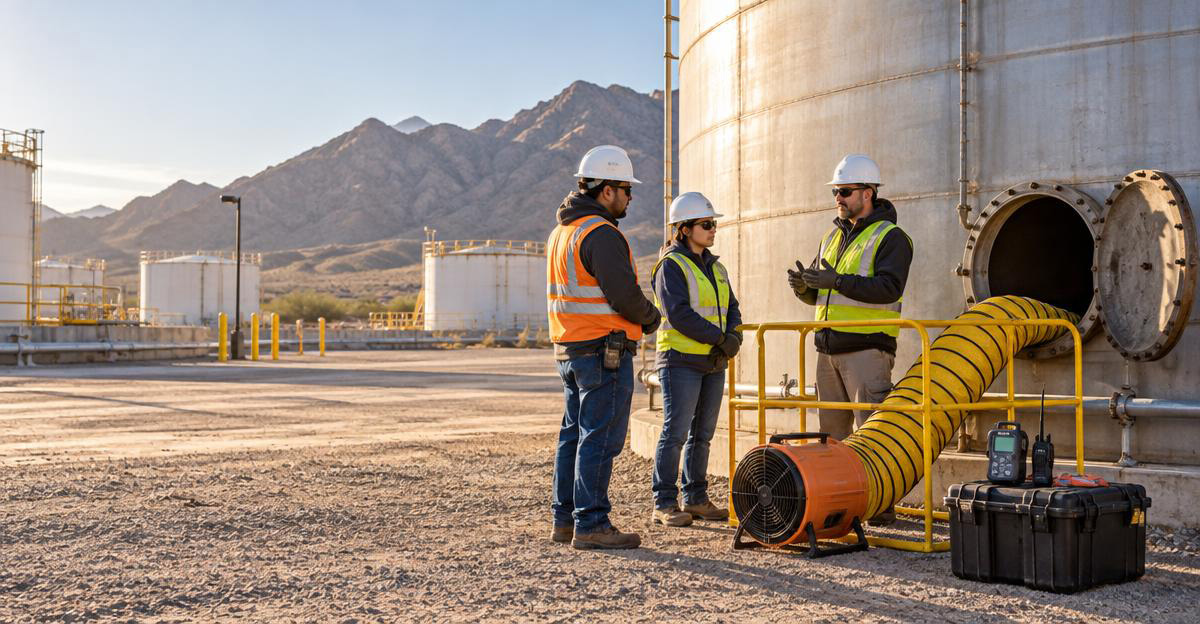
Confined spaces present some of the most severe hazards in general industry and construction. Toxic atmospheres, engulfment risks, and mechanical hazards can turn a routine maintenance task into a fatal event. Employers must understand the Confined Space Training Requirements Arizona enforces to protect their workers and maintain compliance.
This guide explains what OSHA 29 CFR 1910.146, the Permit-Required Confined Spaces standard, requires for safety training. It covers who must be trained, what triggers retraining, and what documentation a compliance officer will request during an audit.What Defines a Permit-Required Confined Space
Before training begins, employers must evaluate their facility to identify confined spaces. A confined space is large enough for a worker to enter, has limited means of entry or exit, and is not designed for continuous occupancy. A permit-required confined space contains additional hazards that make entry dangerous.| Hazard Type | Common Examples | Required Control Method |
|---|---|---|
| Atmospheric | Low oxygen, hydrogen sulfide, carbon monoxide | Continuous gas monitoring and forced air ventilation |
| Engulfment | Grain, sand, liquids, loose materials | Lockout tagout, blanking, and physical barriers |
| Configuration | Inwardly converging walls, sloped floors | Fall protection, retrieval lines, and mechanical advantage systems |
| Mechanical | Agitators, augers, exposed wiring | Complete energy isolation and lockout tagout |
| Thermal | Steam lines, extreme ambient heat | Isolation, cooling periods, and work rest cycles |
| Chemical | Corrosive residue, toxic sludge | Draining, flushing, and appropriate personal protective equipment |
| Biological | Sewage, mold, animal waste | Decontamination procedures and respiratory protection |
Which Employees Need OSHA Confined Space Training in Arizona?
A common mistake is training only the workers who go inside the space. OSHA requires specific training for three distinct roles, and each needs instruction matched to its responsibilities.Authorized Entrants
Employees who enter the permit space. They need instruction on hazard recognition, communication, equipment use, and evacuation procedures.Attendants
Employees stationed outside the space. They monitor entrants, control access, maintain communication, and initiate non-entry rescue. They never enter the space.Entry Supervisors
Employees who oversee the entry. They verify that all tests are complete, sign the permit, and cancel the permit when work finishes.| Employee Category | Who Typically Fits | Training Depth Required |
|---|---|---|
| Authorized Entrant | Maintenance technicians, inspectors, cleaners | Hazard recognition, PPE use, communication, and self rescue |
| Attendant | Safety personnel, designated spotters | Monitoring conditions, controlling access, and operating retrieval winches |
| Entry Supervisor | Foremen, maintenance managers, safety directors | Permit verification, hazard assessment, and contractor coordination |
What OSHA Confined Space Training Actually Includes
Effective training goes beyond reading the OSHA standard. Defensible Confined Space Safety Training Arizona employers provide must cover the specific equipment and hazards workers will face on site.Hazard Recognition
Identify atmospheric, mechanical, and physical hazards specific to the tanks, vaults, or vessels at your facility.Atmospheric Monitoring
Train employees to use, bump test, and read multi-gas meters before and during entry to detect oxygen deficiency, combustible gases, and toxic vapors.Ventilation Procedures
Calculate required air exchanges and properly position blowers to prevent circulating contaminated air back into the space.Communication Protocols
Establish clear methods for entrants and attendants to communicate using radios, hand signals, or rope tugs.Non-Entry Rescue
Operate tripods, davit arms, and retrieval winches to extract a worker without sending another person inside.Permit Execution
Complete the written permit accurately, verify isolation steps, and cancel the permit when work concludes.Why the Written Permit Program is the Weak Point
Training is only effective if the underlying procedures are accurate. A documented permit space program must outline the specific steps for safe entry at your facility.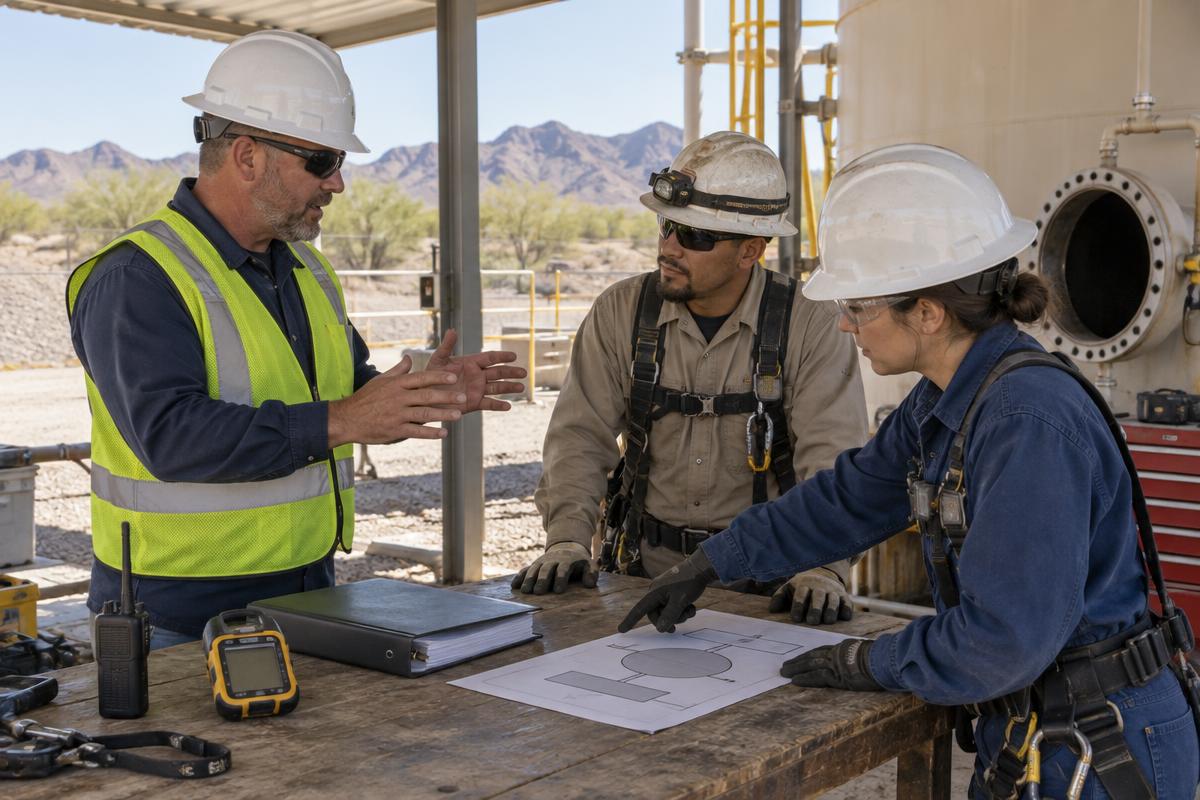
Retraining Triggers Most Employers Miss
Confined space certification is not just an annual requirement. OSHA mandates retraining whenever there is a change in operations or a failure in performance.New Job Assignment
Retraining is required when an employee takes on a new role, such as an entrant becoming an attendant.Change in Space Hazards
Introducing new chemicals, welding operations, or different processes creates new hazards that require updated training.Procedure Change
If the permit program or entry procedures change, all affected employees must learn the new requirements.Observed Deviation
Evidence that an employee is not following the permit procedures triggers immediate retraining.The Annual Program Review
Employers must review their permit-required confined space program at least annually. This review uses canceled permits from the past twelve months to identify deficiencies and improve procedures.Documentation an Inspector May Ask to See
Common Failures We Find During Assessments
Any breaking of the plane of the opening by any part of the body constitutes an entry under OSHA rules.
Attendants must remain outside the permit space continuously during entry operations unless relieved by another trained attendant.
Relying on 911 is rarely compliant. Most local fire departments are not equipped or staffed to perform immediate confined space rescue.
Attendants, entry supervisors, and rescue personnel all require specific instruction tailored to their distinct responsibilities.
Where Lockout Tagout and Fall Protection Fit In
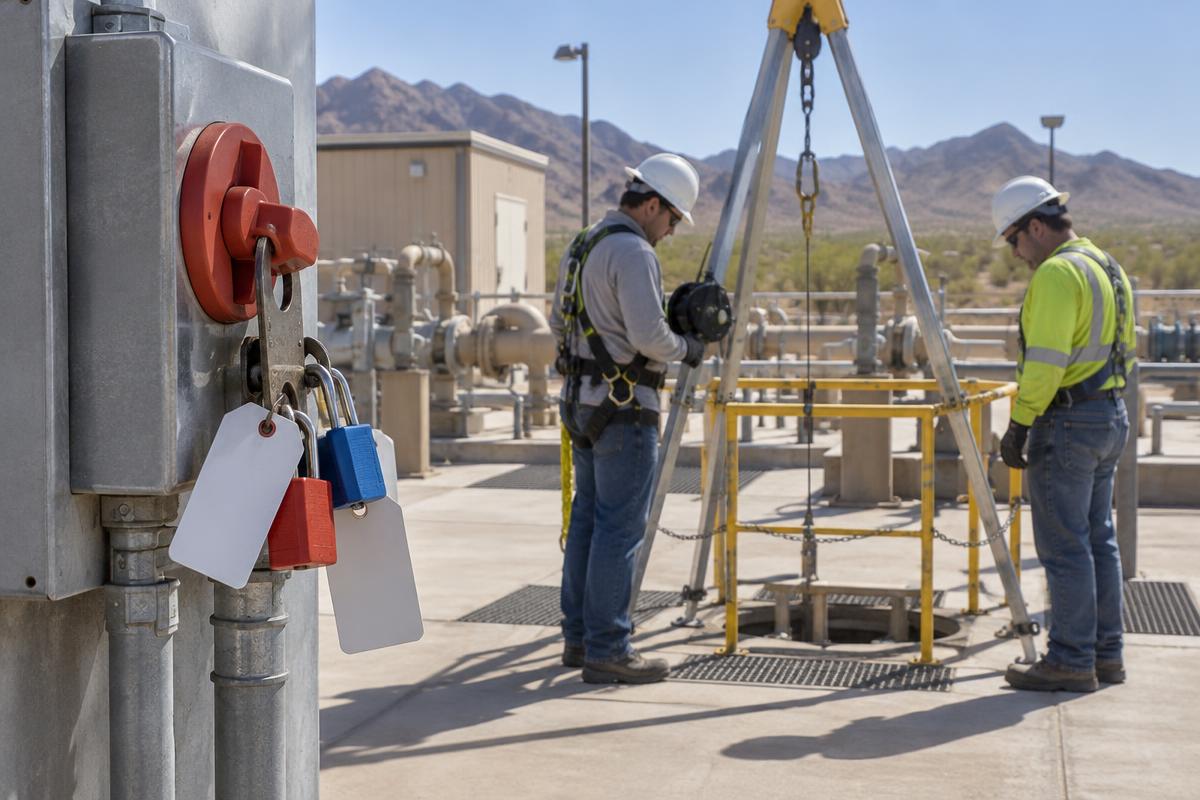
Confined space entry rarely happens in isolation. Controlling mechanical and electrical hazards requires strict adherence to lockout tagout procedures. Vertical entries into manholes or tanks require fall protection and retrieval systems. Employers must integrate these disciplines. Opening a hatch and testing the air is only part of the process. Workers must also lock out agitators, blank chemical lines, and wear full-body harnesses attached to mechanical retrieval devices. Employers can review Weinstein Safety Consulting’s electrical safety support for related compliance.Arizona Specific Considerations
Arizona operates an OSHA approved State Plan through the Industrial Commission of Arizona (ADOSH). State Plans must be at least as effective as federal rules and may adopt more stringent requirements, so multi-state employers should confirm the rules that apply in each jurisdiction.Building a Program That Holds Up
Frequently Asked Questions
How often is confined space training required?
OSHA does not set a fixed annual date for general retraining. Retraining is required when duties change, new hazards emerge, procedures change, or an employee deviates from the established protocol.
What defines a permit-required confined space?
It is a confined space that contains or has the potential to contain a hazardous atmosphere, engulfment hazard, inwardly converging walls, or any other recognized serious safety or health hazard.
Can the attendant perform a rescue?
An attendant can perform non-entry rescue using a retrieval line and winch from outside the space. They may never enter the space to perform a rescue.
Do contractors need their own training?
Yes. Host employers must inform contractors of the hazards within the space, and contractors must ensure their own employees are fully trained to execute the entry safely.
What is the alternate entry procedure?
Alternate entry allows workers to enter certain spaces without a full permit if the only hazard is atmospheric and continuous forced air ventilation alone is sufficient to maintain safe conditions.
Get a Second Set of Eyes on Your Confined Space Program
If you cannot immediately produce a written permit program, current training certifications, and canceled permits from the last twelve months, there may be gaps worth addressing before an inspection or incident exposes them.
Weinstein Safety Consulting, LLC provides safety consulting, program development, OSHA compliance assistance, and on site or virtual training for construction companies, warehouses, manufacturers, municipalities, and skilled trades throughout Greater Phoenix, Arizona’s West Valley, and Michigan.